










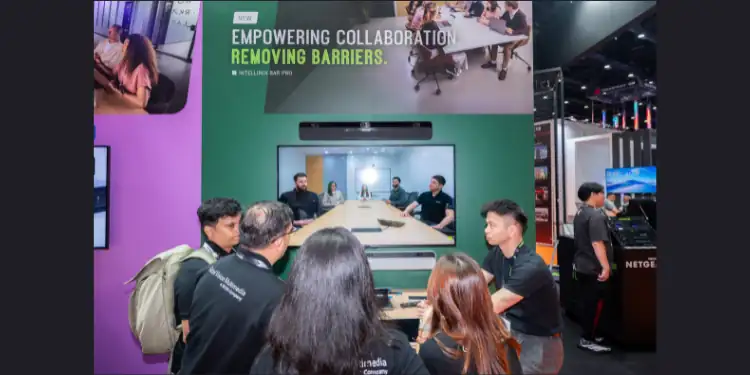
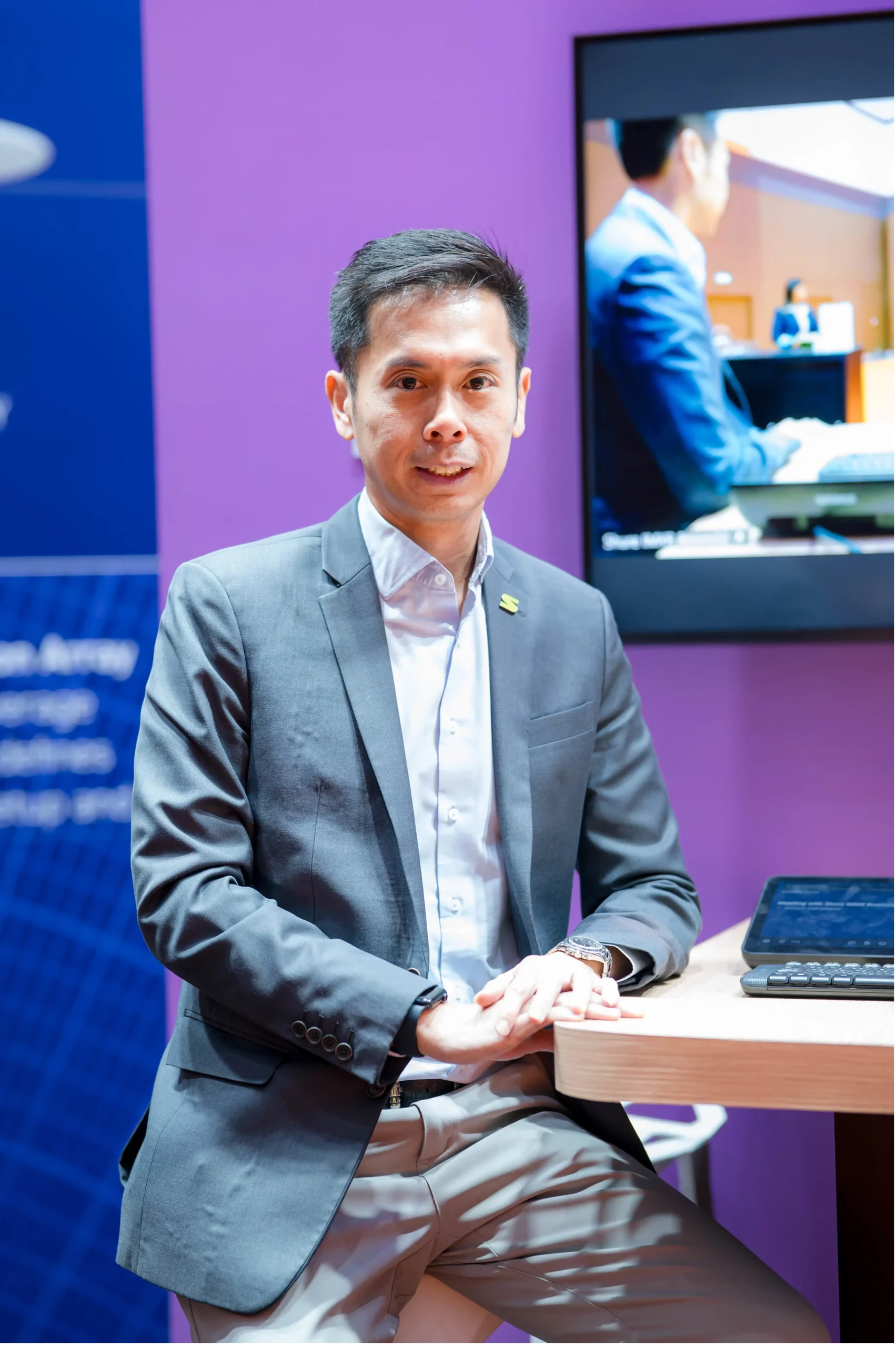
As artificial intelligence becomes increasingly embedded in professional AV, audio quality has emerged as a critical enabler rather than just another component of the technology stack. We spoke with Eric Ong, Sales Director, Shure Southeast Asia & Pacific, about how intelligent audio is reshaping collaboration, the trends driving the professional audio market across Asia, and what the next generation of AV environments will look like.
……………………………………………………………………..
AI is becoming increasingly embedded in professional AV solutions. How is intelligent audio transforming workplace collaboration, conferencing, broadcast, and other professional AV environments, and what tangible benefits are end users experiencing?
AI is changing the way professional AV environments are designed, managed, and experienced, but AI is only as effective as the quality of the information it receives. As organisations increasingly rely on AI-powered meeting assistants for transcription, automated note-taking, real-time translation, meeting summaries, and action items, high-quality audio has become the foundation that enables these capabilities to perform accurately and consistently.
In workplace collaboration, intelligent audio ensures every participant is heard clearly by reducing background noise, managing echo, and capturing voices naturally across the room. This creates stronger inputs for AI tools while also supporting meeting equity, where both in-room and remote participants can contribute equally and confidently. When everyone is heard clearly, conversations become more inclusive, AI-generated notes become more accurate, and teams can spend less time clarifying discussions and more time making decisions.
In broadcast, sports, and live production environments, intelligent audio is helping production teams capture sound with greater precision while simplifying deployment. Solutions such as Shure’s DCA901 Planar Array Microphone enable broadcasters to deliver more immersive audio experiences with fewer microphones and less cabling, improving operational efficiency without compromising performance.
Ultimately, intelligent audio is no longer just about delivering exceptional sound quality. It provides the reliable foundation that modern AI-powered collaboration depends on. As hybrid work continues to evolve, organisations need meeting environments that capture conversations accurately, support equitable participation, and provide AI with the high-quality data required to generate trustworthy insights, summaries, and translations
From your perspective, what are the most significant trends shaping the professional audio market across Asia, and how are customer expectations evolving as organisations invest in smarter and more connected spaces?
Across Asia, one of the most significant trends is the shift towards smarter, more connected spaces. Organisations are investing in hybrid collaboration, digital infrastructure, education technology, enterprise AV, broadcast, hospitality, and live environments, and audio is becoming a central part of that transformation.
Customer expectations have also evolved. They are no longer looking at audio as a standalone component. They want solutions that are scalable, easy to deploy, simple to manage, and able to integrate smoothly with wider AV and IT ecosystems.
We are also seeing stronger demand for consistency. Whether it is one meeting room, a campus, a broadcast environment, or a large enterprise deployment, customers want audio experiences that are reliable and repeatable. For Shure, that means continuing to deliver trusted audio performance while making our solutions more intelligent, connected, and easier for integrators and end users to manage.
Looking ahead, what do you believe will define the next generation of professional AV environments, and how is Shure positioning itself to help organisations create more intelligent, adaptive and people-centric collaboration spaces?
The next generation of professional AV environments will be defined by intelligence, adaptability, scalability, and simplicity. Organisations want spaces that can support different ways of working, learning, presenting, and collaborating without adding complexity for users or technical teams.
Gartner predicts that by 2028, more than 20% of digital workplace applications will use AI-driven personalisation to create adaptive worker experiences. Gartner also notes that digital workers who are satisfied with their work applications are nearly three times more likely to report being much more productive. This is an important signal for AV as well: technology needs to adapt to people, reduce friction, and improve the overall experience.
Shure is positioning itself by continuing to build intelligent audio solutions that combine trusted performance with easier deployment, stronger integration, and more flexible management. future of AV is not about adding more technology into a room is about making spaces work better for people through clearer communication, reliable performance, simplified management audio experiences that help organisations collaborate with confidence.






Comments 1