






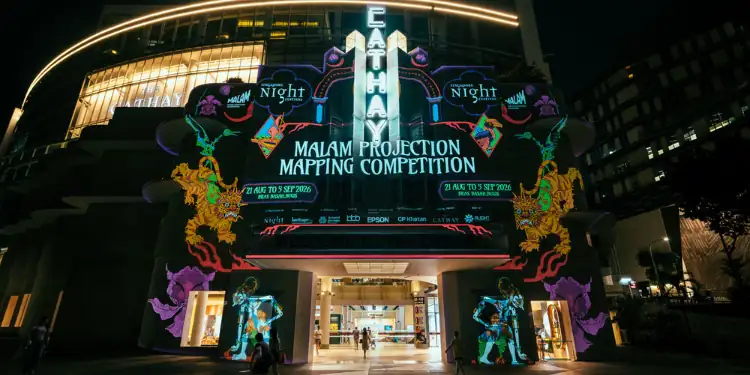
Epson’s 30,000-lumen laser projection technology brought the inaugural MALAM Projection Mapping Competition to life, transforming one of Singapore’s most recognisable landmarks into a powerful platform for emerging digital artists.
As darkness descended over Singapore’s Bras Basah.Bugis precinct, the historic façade of The Cathay took on a new identity. Colour, movement and imagination swept across the building as digital artists from Southeast Asia presented their stories at architectural scale.
The spectacle marked the inaugural MALAM Projection Mapping Competition, introduced as part of the seventeenth edition of the Singapore Night Festival organised by HeritageSG. Supported by Epson, the competition attracted close to 50 entries from across Southeast Asia, reflecting both the depth of creative talent in the region and the growing appeal of projection mapping as a storytelling medium.
More than a new festival programme, MALAM was conceived as a platform through which emerging artists could experiment, reach wider audiences and contribute to the future direction of the Singapore Night Festival.
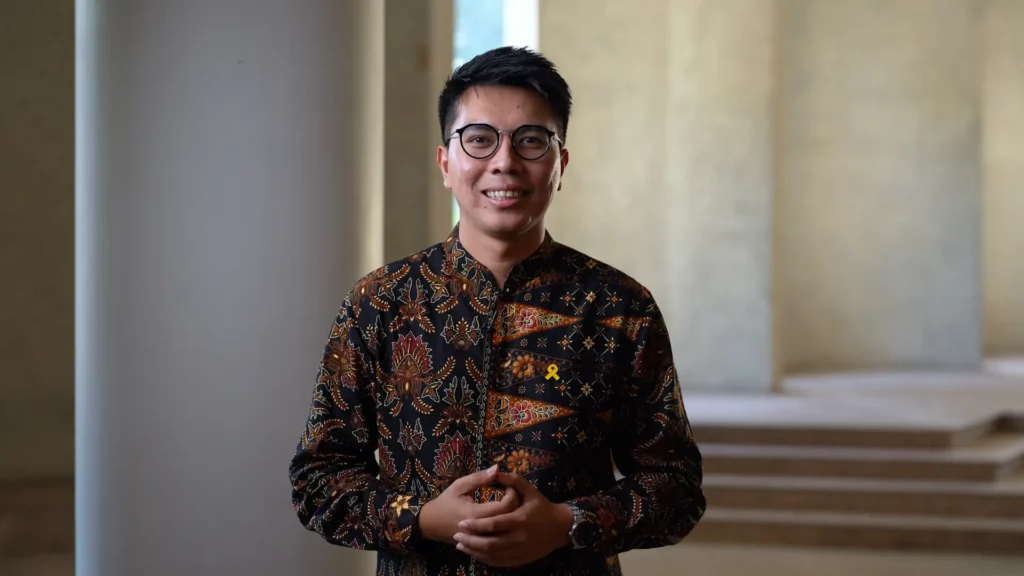
“As Singapore Night Festival enters its seventeenth edition, we felt it was time to go beyond presenting great works and start nurturing the next generation of creative talent,” explains Qazim Karim, Festival Director(pictured above).
“Inspired by festivals across the region, we created MALAM to give artists a platform to experiment, connect with wider audiences and help shape the festival’s future. It also supports our vision of growing Bras Basah.Bugis as Singapore’s creative district.”
A Landmark Made for Storytelling
The Cathay was deliberately selected as the canvas for the competition. With its distinctive façade and deep association with Singapore’s cinematic history, the landmark provided both a visually commanding projection surface and a meaningful connection between traditional and contemporary storytelling.
“Choosing The Cathay was very intentional,” notes Qazim. “It has always been a place where stories come to life. In the past, those stories unfolded on the silver screen; today, the building itself becomes the screen—a living canvas for contemporary artists.
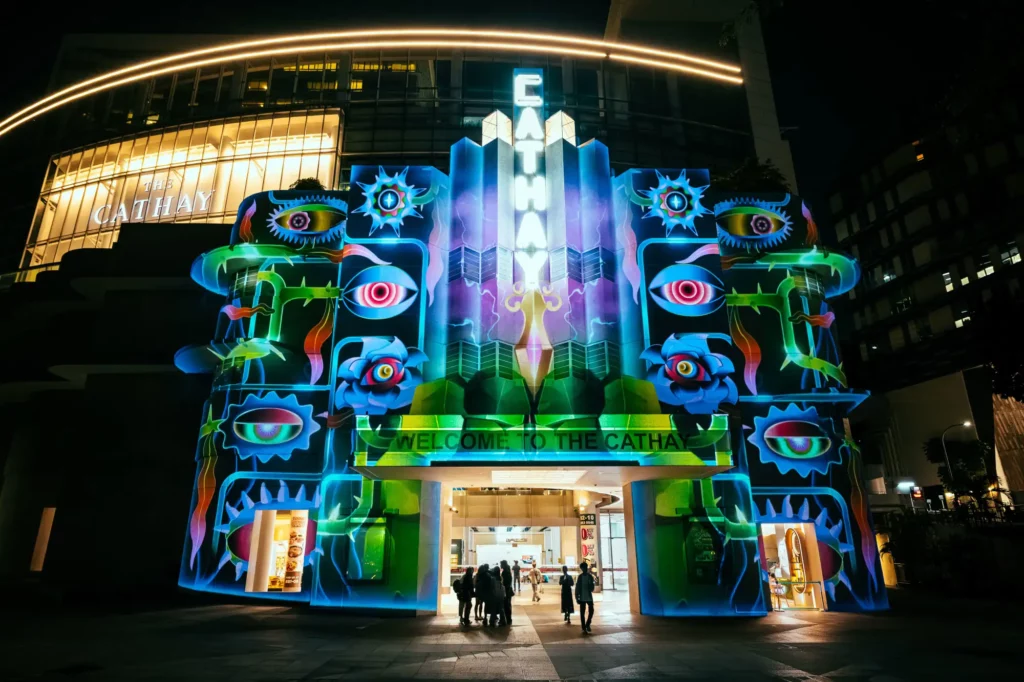
“It is a way of honouring The Cathay’s legacy while showing that, even as technology evolves, the power of storytelling remains unchanged.”
Projecting onto an architectural façade of this scale, however, requires more than creative content. The system had to contend with ambient city light, extended projection distances and the architectural characteristics of the building while preserving the colour, detail and movement within each artist’s work.
The projection also needed to remain bright, consistent and visually cohesive throughout the experience. Any loss of brightness, colour accuracy or alignment could have weakened the artists’ intended impact—particularly when multiple projectors were being used to create a unified image across a large surface.
High Brightness for a Demanding Environment
Epson EB-L30000UNL laser projectors, paired with interchangeable zoom lenses, were deployed to project the competition entries across The Cathay’s façade.
EB-L30000UNL delivers 30,000 lumens of white and colour brightness using Epson’s 3LCD laser projection technology. This high light output was critical to producing vivid, clearly defined images within a challenging outdoor environment, where the projections had to compete with surrounding illumination.
The projectors feature a native WUXGA resolution of 1920 × 1200 and Epson’s 4K enhancement technology, helping reproduce the fine details, textures and movement within the artists’ work with greater clarity. An exceptionally high contrast ratio of more than 5,000,000:1 also supported the presentation of deeper blacks and more pronounced visual detail.
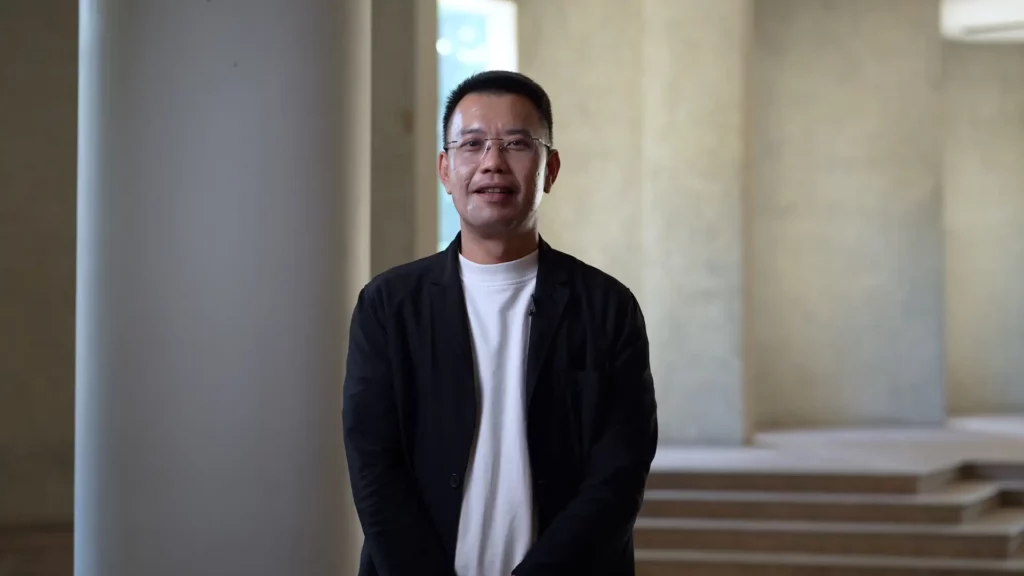
“Every artist has a distinctive creative vision, expressed through colour, detail and movement,” says Alex Chua, Manager – Visual Product at Epson Singapore (pictured above). “Our high-brightness laser projectors reproduce those elements with the accuracy and clarity they deserve—even when the artwork is projected across the entire façade of The Cathay.”
The projectors’ 3LCD architecture delivers equally high white and colour light output, helping retain the vibrancy of the artists’ chosen palettes rather than allowing colours to appear washed out on the building surface. This was particularly important for a competition featuring different artistic approaches, each requiring its own visual character to be communicated faithfully.
“Large-scale outdoor projection presents several challenges, including ambient light, long projection distances and expansive building surfaces,” Alex adds. “Epson’s high-brightness laser projectors deliver the powerful and consistent performance needed to keep the images vibrant, clear and impactful throughout the experience.”
Flexibility for Architectural Projection
The EB-L30000UNL also incorporates features developed for complex, multi-projector installations. Its geometry-correction tools allow images to be adjusted to suit unconventional surfaces, while edge-blending and tiling capabilities enable multiple projected images to be combined into a single large-scale composition.
An integrated camera supports automatic colour calibration and geometry correction, helping maintain visual consistency between projectors. With works containing constantly changing colours and movement, close alignment between all three projected images was essential to creating the impression of one continuous digital canvas.
The laser light source offers up to 20,000 hours of maintenance-free operation under specified conditions, supporting dependable performance during demanding event applications. The projector can also be installed with 360-degree rotation and adjustable tilt, providing further flexibility for temporary installations where projection positions may be restricted.
“Bringing projection mapping to life on this scale requires both creative ambition and strong technical capabilities,” says Qazim. “Epson’s projection technology and expertise gave us the confidence to present the artists’ works at the scale and quality they deserved.
“Its support also enabled other projection experiences across the festival, helping artists realise ambitious ideas and giving audiences new ways to experience digital art.”
Building a Regional Creative Platform
The response to MALAM’s first edition demonstrated the appetite among Southeast Asian digital artists for opportunities to showcase their work publicly and at architectural scale.
“For its inaugural edition, MALAM attracted close to 50 entries from across Southeast Asia,” says Qazim. “That response reflects the region’s vibrant community of digital artists and their desire for more opportunities to share their work.”
The ambition is for MALAM to develop beyond a competition into an established platform for collaboration and cultural exchange—connecting artists across Southeast Asia while introducing their stories to international audiences.
For Epson, the partnership also demonstrates how projection technology can serve as a creative enabler rather than simply a display medium.
“Epson and the Singapore Night Festival share a passion for creativity and innovation,” conclude Alex. “Through this partnership, we hope to empower artists, inspire new forms of visual storytelling and create memorable experiences that bring art, technology and the community closer together.”
By transforming The Cathay from an architectural landmark into a living digital canvas, the inaugural MALAM Projection Mapping Competition created a bridge between Singapore’s storytelling heritage and a new generation of regional artists. Powered by high-brightness projection, their ideas moved beyond the screen and became part of the city itself.
WATCH THE VIDEO HERE: https://www.youtube.com/watch?v=dtl4N-FCiaE