






For a venue hosting everything from corporate conferences to major fashion events, a one size fits all audio system can quickly become a limitation. Tokyo’s Hikarie Hall has taken a different approach, building a flexible L-Acoustics platform that can adapt to the demands of two very different spaces and scale up when the event gets bigger.
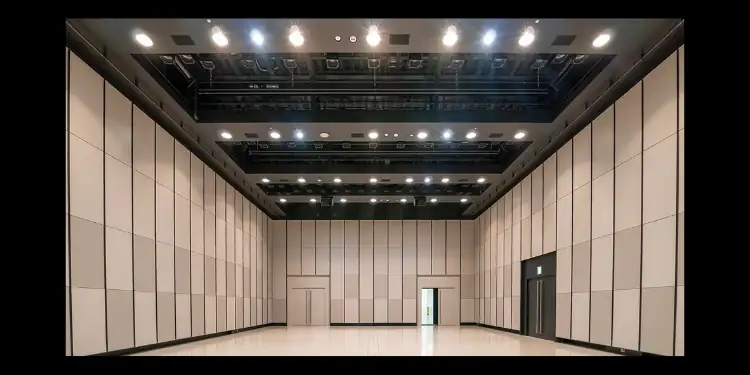
Located on the ninth floor of Shibuya Hikarie, directly above Tokyo’s busy Shibuya Station, Hikarie Hall has become one of the district’s sought after event venues. Its two spaces, Hall A and Hall B, accommodate a wide range of productions, including corporate events, receptions and around half of the runway shows held during Rakuten Fashion Week Tokyo.
That variety was becoming increasingly difficult to support with the venue’s ageing sound system. For Pacific Art Center, which oversees sound management at Hikarie Hall, the problem was not simply that the system was old. It was restricting the types of events the venue could confidently take on.
At larger and noisier events, particularly receptions, the existing system could struggle to deliver sufficient volume and clarity. Temporary speakers had been added to supplement the permanent installation, but even that approach was no longer providing enough headroom.
The venue turned to L-Acoustics Certified Partner Bestec Audio to rethink the system. The resulting installation combines permanent L-Acoustics Kiva II and A Series systems in both halls with a mobile inventory of A Series enclosures and KS21 subwoofers.
The result is less about installing a single powerful system and more about creating an adaptable audio platform that can be reshaped around the event.
A System Designed Around the Venue
The decision followed side by side demonstrations of several manufacturers. Performance was obviously critical, but aesthetics also mattered.
Hikarie Hall wanted a system that would blend into its architectural environment rather than dominate it. The dark grey brown finish of the L-Acoustics enclosures offered a softer visual profile than the solid black systems the team had considered.
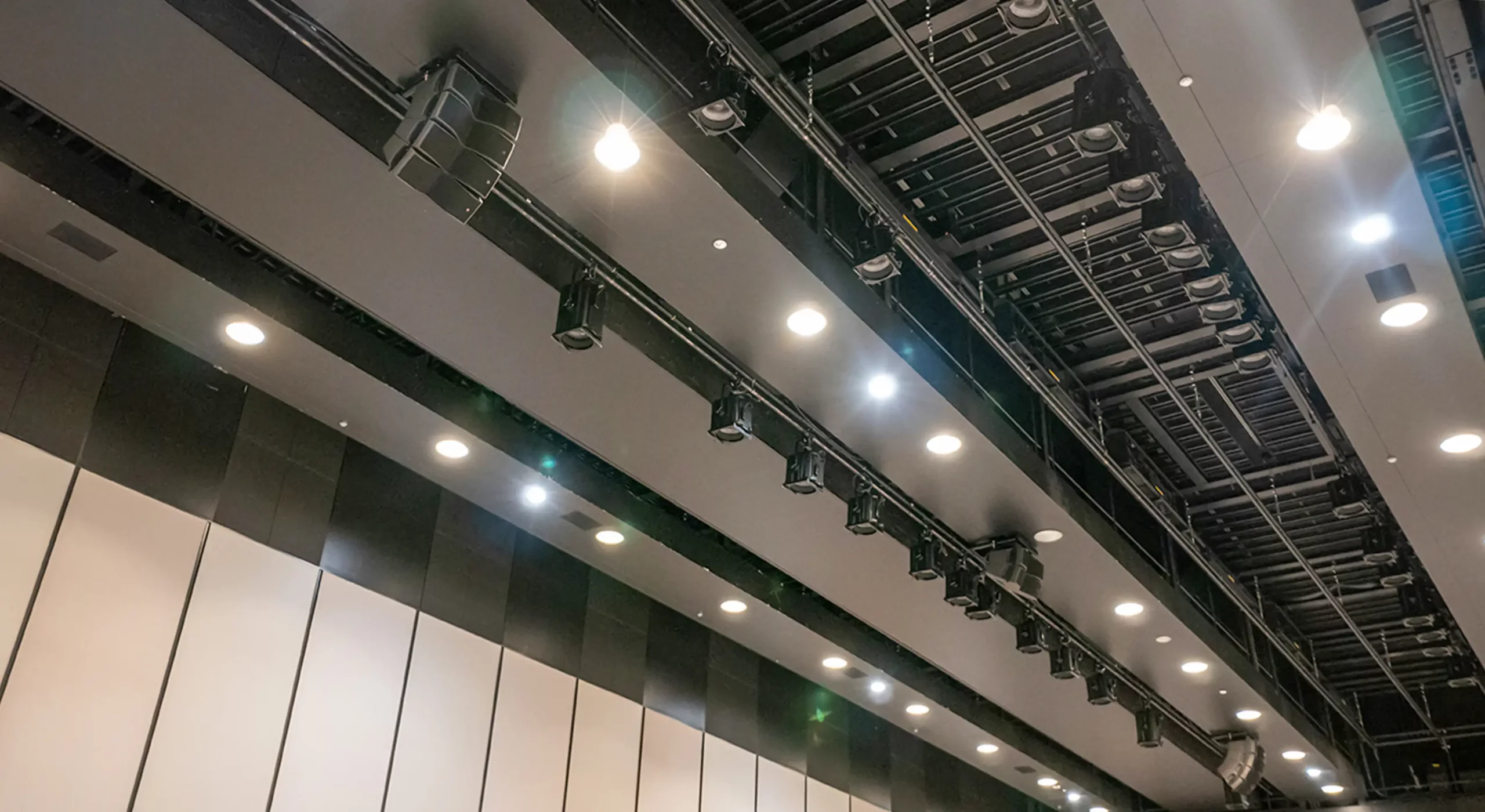
More importantly, the demonstrations showed that the system could deliver the sonic performance required across the venue’s varied programming. Hall A uses a permanent Kiva II system, with two enclosures at centre and four on each side. Twenty flush mounted X8i coaxial speakers provide distributed coverage while keeping the visual impact of the system to a minimum. Hall B takes a different approach, using two A10i Wide enclosures as the main system, supported by two X8 units for side fill and 15 flush mounted X8i speakers.
The two rooms therefore have systems tailored to their individual requirements, while sharing a common L-Acoustics platform.
Scaling Up Per Event
The real flexibility comes from the mobile system.
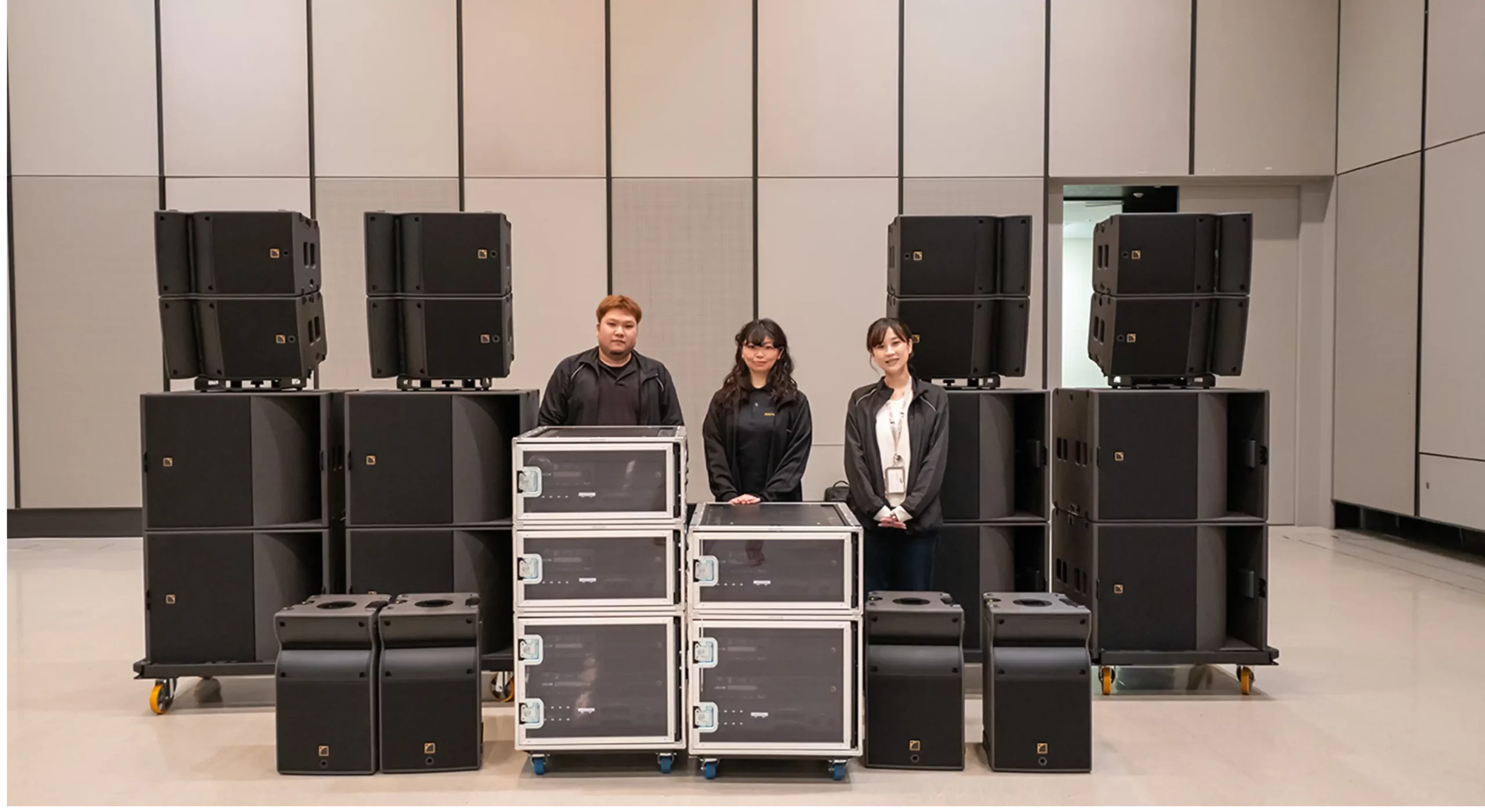
For larger productions, Hikarie Hall can deploy eight A10 Focus and four A10 Wide enclosures, together with eight KS21 subwoofers. Seven LA12X amplified controllers and five LA4X units provide system drive and processing.
That means the venue does not have to permanently install its largest possible system simply to accommodate occasional high demand events. Instead, it can scale the system when required.
For Pacific Art Center, that has opened up new possibilities.Since the upgrade, Hikarie Hall has been able to accept bookings it once wasn’t equipped to serve. “We can now take on events requiring high volume levels that we would previously have had to decline,” said Ayaka Oyama of Pacific Art Center. “Since installing the L-Acoustics system, we feel we’re able to accommodate almost every request that comes our way.”
Putting the Venue Team in Control
The upgrade has also changed how the venue approaches system preparation. Bestec Audio designed the system using L-Acoustics Soundvision and trained the Pacific Art Center team to handle day to day configuration themselves. That has given the venue greater autonomy, particularly when event layouts change.
Settings can be prepared on a laptop ahead of an event and loaded when the production arrives. Even when the room is reconfigured from its usual lengthways orientation to a widthways layout, the team can adjust the amplifier settings while maintaining the intended sound coverage.
That flexibility proved particularly useful ahead of Rakuten Fashion Week Tokyo in March 2026, when Oyama used Soundvision simulations to prepare the hall for the show.
The workflow also simplifies handovers. Because the system configuration can be prepared and recalled, external production teams can take over with less explanation, while angle adjustable enclosures make both flown and ground stacked configurations easier to manage.
From Fashion Shows to Conferences, Adaptability is Key
For Hikarie Hall, the biggest change is not simply louder sound. It is the ability to approach each event according to its requirements rather than forcing every production into the limitations of a fixed system. The permanent installations provide a consistent foundation across both halls, while the mobile A Series and KS21 inventory provides additional coverage and low frequency extension when required.
As venues increasingly compete to host a wider range of events, that kind of flexibility is becoming an important part of the infrastructure itself. Hikarie Hall’s upgrade demonstrates the value of designing an audio system around how a venue actually operates: two rooms, constantly changing configurations and clients who expect the space to accommodate everything from corporate gatherings to high profile fashion productions.
For the venue team, the objective is straightforward: make the sound system adaptable enough that the answer to a client request is increasingly “yes.”