






Thailand is spending its way into the future — and the Pro AV industry is right in the middle of it.
More than US$16 billion in data centre investments were approved in the country in the first half of 2025 alone. A new 20,000-seat Bangkok arena is in development. The IMPACT exhibition and convention complex is expanding. Annual education spending exceeds 800 billion baht, sustaining consistent demand for smart classrooms, hybrid learning environments, and campus-wide AV infrastructure.
Each of these projects carries an AV footprint — and the system integrators, consultants, and technology vendors best positioned to capture them will be at InfoComm Asia 2026 this July.
A Market in Motion
Thailand’s trajectory is part of a larger regional story. Southeast Asia’s digital economy is on track to approach US$1 trillion by 2030, while the region’s data centre market is forecast to more than double — from US$13.7 billion in 2024 to over US$30 billion by the end of the decade. Greenfield investment in ASEAN’s information and communications sector jumped 43% in 2024. Airports, convention centres, smart cities, entertainment destinations, and transportation networks across the region are all deploying professional AV technologies at scale.
These aren’t background trends. They are live briefs — and the organisations commissioning this infrastructure are among the end users attending InfoComm Asia 2026.
The 2026 edition expects over 200 exhibiting brands and 8,200 professional visitors from 50+ countries, spanning education, enterprise, live events, broadcast AV, command and control, government, and hospitality.
Three Days, Eight Topic Streams
The 2026 Summit programme covers the conversations that are actually shaping project decisions right now. Sessions span Higher Education, Broadcast AV, Digital Signage, Live Events & Immersive Technology, Smart Workplace, Audio & AV Technology, and Emerging Trends & AI — with a full AVIXA Xchange LIVE programme running alongside.
The opening keynote sets the tone: “The Invisible Revolution: How AI is Rewriting the Rules of Human Experience.” Not a technology overview — a business decision framework for leaders already being asked by clients what AI means for their next installation.
From there, the programme goes deep where the regional market is moving fastest. The Broadcast AV convergence debate — “Broadcast, AV, and IT Convergence: Who Owns the Future of Content Delivery?” — gets a full panel. The Digital Signage track brings APAC-specific demand data into a global trend conversation. The Live Events and Immersive Technology sessions include a case study from MGM’s Fantasy Box and a panel on scaling immersive storyworlds commercially — directly relevant as entertainment and MICE venues multiply across Asia.
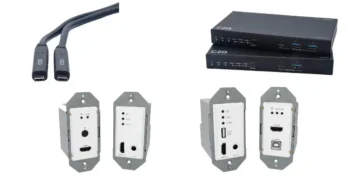
For integrators and IT channel professionals, the Audio & AV Technology sessions speak directly to what’s on the bench right now. “USB-C — Hell or Heaven” cuts through the interoperability confusion that continues to complicate real-world deployments. “Searching for the One True Standard of AV over IP: Myth, Reality, or Market Evolution?” addresses the specification question that increasingly determines which systems make it onto the project sheet.
And the people making those project decisions will be in the room. InfoComm Asia 2026 is structured to bring end-user decision-makers — from education, enterprise, government, hospitality, live events, and beyond — directly into the same space as the integrators and vendors serving them. Every topic stream ends with structured networking and a Connect After session at the AVIXA booth, designed to move the conversation from stage to floor.

This is where the ecosystem meets: manufacturers, distributors, integrators, consultants, and end users — across borders, across verticals, in three days.
The Business Case for Bangkok in July
InfoComm Asia functions as the annual reset point for Asia’s Pro AV market. Channel partnerships are reviewed. Regional distribution arrangements are made. End users who have been evaluating solutions digitally meet suppliers face-to-face for the first time.
For system integrators operating in — or looking to grow into — Thailand, Vietnam, Indonesia, Malaysia, the Philippines, India, China, Hong Kong, and beyond, three days in Bangkok represent the highest-density commercial opportunity on the regional calendar.
The market is moving. The question is who is in position to capture it.