





A historic palace, Himalayan landscapes brought to life through projection, encounters with figures from India’s independence movement, and a dining table that tells stories of regional cuisine. At Bantony Castle Museum in Shimla, history is no longer confined to artefacts and display panels. It unfolds across walls, floors and unexpected surfaces, inviting visitors to experience Himachal Pradesh’s heritage in an entirely different way.
Once the summer palace of the Maharaja of Sirmaur, the 145-year-old colonial-era property has been reimagined as Himachal Pradesh’s first digital museum. Behind its transformation was Tricolor India Schauspiel, which deployed 12 Christie 1DLP laser projectors across six digital galleries, creating experiences that range from panoramic Himalayan landscapes to animated traditional embroidery and atmospheric tales of Shimla’s colonial past.
Rather than adopting a one-size-fits-all approach, Tricolor India Schauspiel treated each gallery as a distinct storytelling environment. The installation combines five Christie Inspire Series DWU960ST-iS, four Captiva DWU500S and three GS Series DWU630-GS projectors, with each system selected and configured around the gallery’s architecture, content and intended visitor experience.
“The vision for Bantony Castle Museum was to create a contemporary visitor experience that brings Shimla’s history and Himachal Pradesh’s cultural heritage closer to audiences, while respecting the character of this important property,” said Himanshu Sabharwal, Creative Director of Tricolor India Schauspiel. “Every gallery required a different visual language, so we considered the architecture, content, viewing distance, and desired audience experience before selecting and positioning each projector. Christie’s breadth of 1DLP laser solutions gave us the flexibility to translate these varied creative concepts into cohesive and engaging experiences.”
Stepping Into the Himalayas
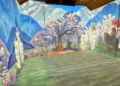
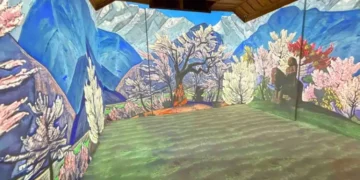
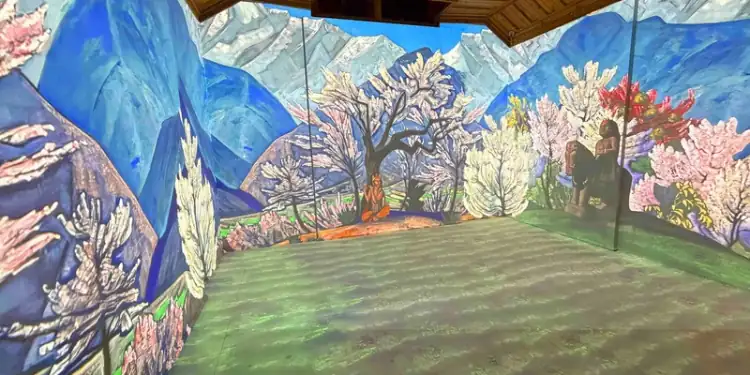
Among the museum’s most visually ambitious installations is the Nicholas Roerich Immersive Gallery, where five Christie DWU960ST-iS projectors turn the surrounding walls and floor into a 270-degree canvas.
Inspired by the paintings of Nicholas Roerich, whose work captured the grandeur and spiritual character of the Himalayas, the gallery surrounds visitors with animated interpretations of his artwork. Projection-mapped content developed by Ross Ashton, director of Tricolor India Schauspiel, is accompanied by an immersive soundscape created by Karen Monid, bringing movement, atmosphere and depth to the mountain-inspired visuals.
Achieving a seamless experience across multiple surfaces required precise projector positioning, alignment, synchronisation and calibration, ensuring that the imagery remains visually consistent as it moves between the walls and floor.
Bringing Historical Figures Face to Face With Visitors
Elsewhere, the Summer Capital Gallery explores Shimla’s transformation through the centuries, tracing its mountainous setting, colonial architecture, institutions and changing urban identity.
Two Christie DWU630-GS projectors create a synchronised L-shaped corner projection that makes the gallery’s architecture part of the historical narrative.
The experience becomes more personal through holographic-style presentations featuring Mahatma Gandhi and Satyanand Stokes. Powered by two Christie Captiva DWU500S projectors, these digital representations introduce visitors to figures associated with India’s independence movement, adding a human dimension to the wider historical account.
From Traditional Embroidery to a Digital Dining Table
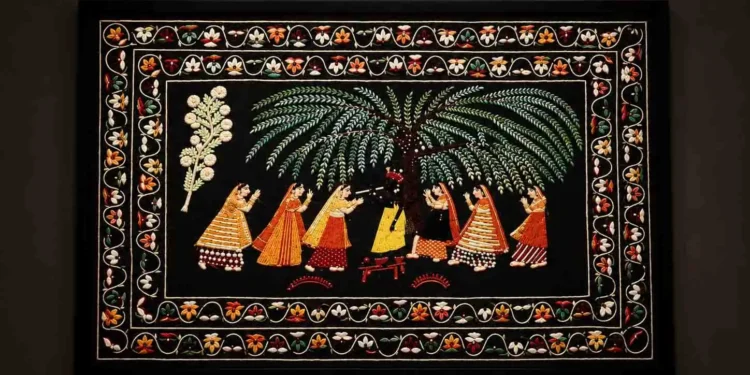
The museum also demonstrates how projection can reinterpret cultural traditions without losing sight of their origins. In the Art, Life & Culture Gallery, a Christie Captiva DWU500S projector animates the intricate characters and motifs of Chamba Rumal, a traditional form of pictorial embroidery associated with Himachal Pradesh. By introducing movement to the familiar designs, the installation offers visitors a new way to appreciate the craft and its cultural significance.
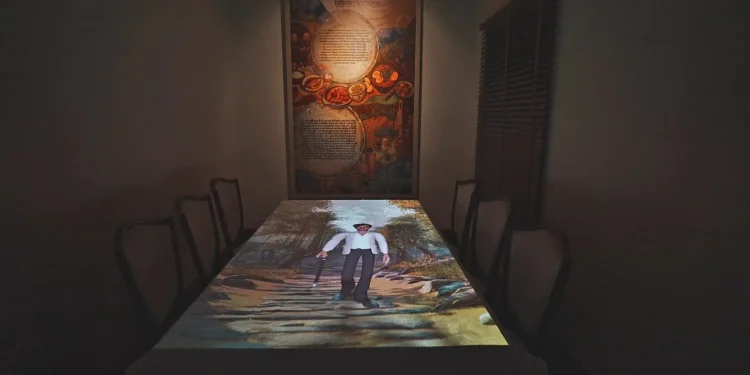
A different sensory journey awaits in the Taste of Shimla Gallery, where another Captiva DWU500S projector is mounted above a purpose-built dining table. Instead of serving food, the table becomes a projection surface for dishes, ingredients and culinary narratives. The experience explores the region’s food heritage through visuals that transform an everyday setting into an unconventional storytelling platform.
Exploring Shimla’s Mysterious Side
Not all of Bantony Castle’s stories are rooted in celebrated historical figures or traditional arts. The Mysteries of Shimla Gallery takes visitors into the more enigmatic side of the city’s colonial past, exploring legends, unexplained incidents and stories that have become part of local folklore.
A Christie DWU630-GS projector delivers large-format visuals across the gallery wall, while atmospheric imagery and synchronised audio create a cinematic setting for these tales. The result is a noticeably different experience from the museum’s other galleries, illustrating how the same underlying projection technology can support contrasting storytelling styles, from cultural interpretation to suspenseful historical narratives.
Where Technology Serves the Story
Across the museum, the technical challenge extended beyond delivering bright, high-quality images. Each installation had to work within the architectural constraints of a heritage property while supporting different content formats, projection surfaces and viewing conditions.
The combination of Christie’s Inspire, Captiva and GS Series projectors gave Tricolor India Schauspiel the flexibility to accommodate these varied requirements without compromising the individual character of the galleries.
“Bantony Castle Museum demonstrates how projection can become integral to the narrative rather than simply a way to display content,” said Rishubh Nayar, ProAV Sales Director for India, Christie. “By combining the performance and installation flexibility of our 1DLP laser projectors with Tricolor India Schauspiel’s creative direction, AV engineering, and content integration expertise, the team delivered experiences that adapt to each story. We’re delighted that Christie technology is helping the museum present Shimla’s history and cultural traditions in such varied and compelling ways.”
For Bantony Castle, the transformation offers a way to preserve and present the region’s heritage while making it more accessible to contemporary audiences. It also illustrates the growing role of audiovisual technology in heritage interpretation, where projection does more than accompany an exhibition. It becomes the medium through which history, art and culture are experienced.