







As corporate environments evolve into experience-led, hybrid-ready spaces, audio is no longer just a technical requirement—it’s a critical design element. K-array is redefining its role from equipment provider to design partner, delivering high-performance, “invisible” audio solutions that seamlessly integrate into modern architecture. With Asia emerging as a key growth engine, the company is aligning innovation, aesthetics, and functionality to meet the rising expectations of next-generation workplaces.

SI Asia chats with Tom Riby, Global Business Development Manager, K-array about the company’s plan and ambitions for the Corporate segment.
How important is the corporate segment to K-array’s overall growth strategy in Asia and globally?
Corporate is one of our highest-priority verticals and Asia is central to how we’re scaling it. The shift toward experience-led headquarters, hybrid working and client-facing showcase environments has changed what corporations expect from audio. They want systems that disappear into the architecture but perform at a level that matches the ambition of the space. That’s precisely the brief K-array is built for.
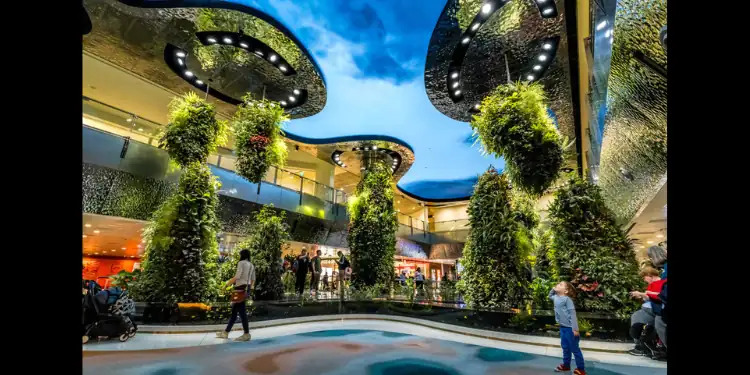
Globally, we’re repositioning ourselves not as an audio vendor but as a design partner, engaging early with architects, consultants and end clients before a specification is written. Asia accelerates that strategy. The region’s appetite for design-forward corporate real estate, the calibre of consultants working on these projects and our existing footprint with references like JLL Singapore, Changi Airport and the ByteDance Beijing headquarters make it a natural growth engine for us over the next three to five years.
What key trends are shaping audio requirements in today’s corporate and hybrid workplace environments?
Four trends matter most. First, space is now multi-purpose, a town hall on Monday, a client pitch on Tuesday, a social event on Thursday. Audio has to flex across all of it. Second, hybrid working has raised the bar for intelligibility; if the remote participant can’t hear clearly, the room has failed. Third, design-led architecture has pushed hardware toward invisibility, Architects are truly pushing the limit of where audio can be hidden, exposed ceilings, glass, stone, timber and minimal surfaces leave nowhere for traditional speakers to hide. Fourth, sustainability and long-term asset value are now part of the AV conversation, clients want systems that last 10-15 years, not three.
Together, these trends favour manufacturers who can deliver discreet form factors, genuine acoustic performance, and tight integration with control ecosystems. Generic boxes on brackets don’t cut it anymore.
How does K-array’s “invisible audio” design philosophy address the needs of modern corporate spaces?
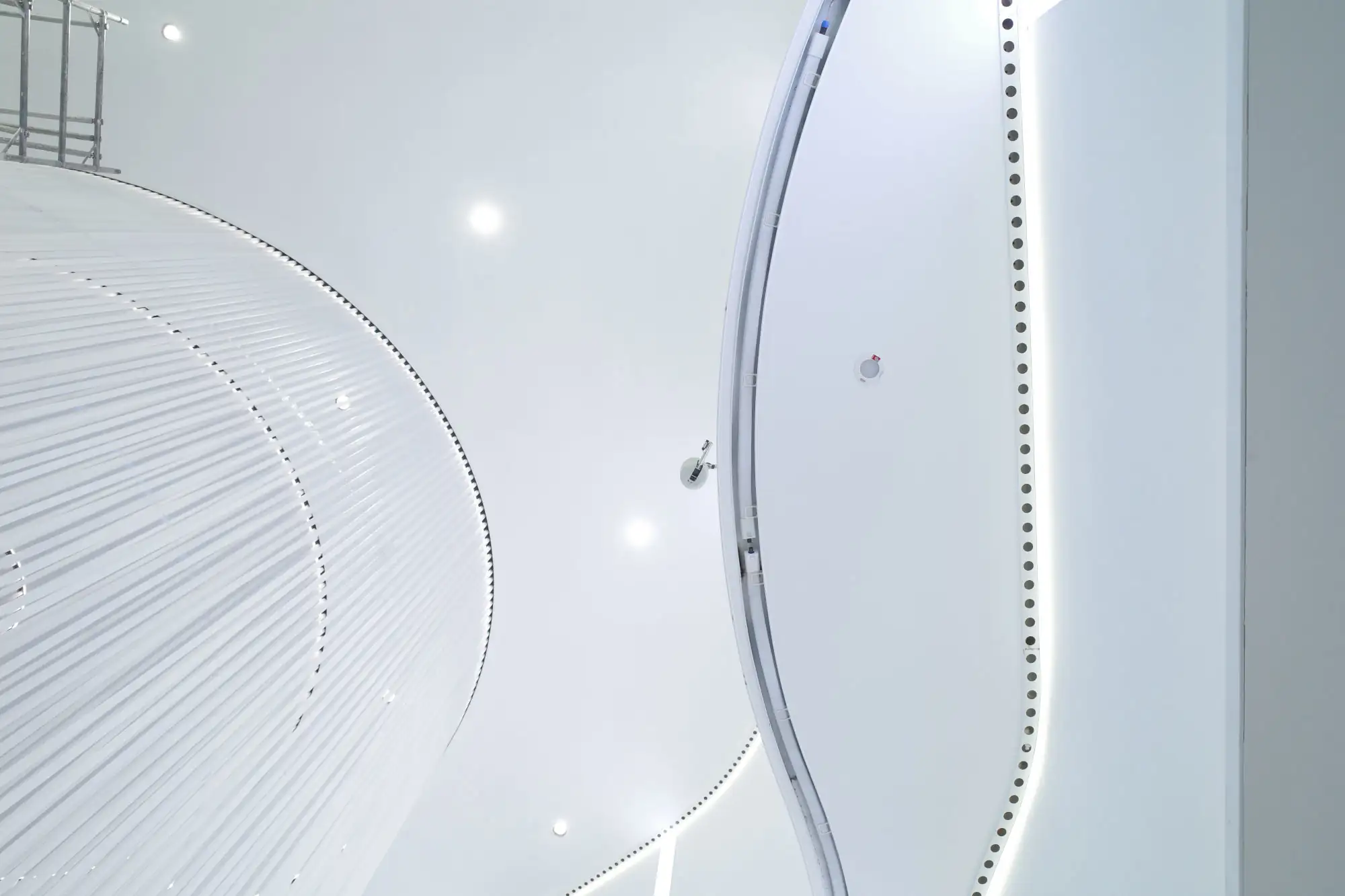
Our philosophy is straightforward: audio should be felt, not seen. Every product we design starts with the question of how it disappears into the architecture, slim line arrays,column speakers the width of a pencil. That lets architects preserve their design intent without compromising on acoustic performance.
In corporate environments, this matters commercially as well as aesthetically. When audio is visually intrusive, it dates the space and undermines the brand signal the client is trying to send. Invisible audio protects the design investment. The ByteDance showroom in Beijing is a good example, a 2,000m² space with metal finishes, display walls and hard surfaces everywhere. The brief demanded concealed audio across multiple zones with no acoustic bleed. Our Anakonda series, flexible 2 meter loudspeaker that can be linked up to 32 pieces made that possible without visible hardware. Nobody even knows where the sound is coming from.
Which K-array solutions are best suited for boardrooms, collaboration spaces, and corporate auditoriums?
Three reference points. For boardrooms and collaboration spaces, our Vyper ultra-flat line arrays and Kobra column speakers deliver high intelligibility from a footprint of millimetres. For larger corporate auditoriums, the Zydus auditorium in India is a good example, our Kayman and Mugello systems scale to full-range performance while remaining architecturally discreet. For lobbies, experience centres, and flexible zones, Anakonda flexible arrays and our KSCAPE RAIL solution integrate audio into lighting infrastructure itself.
The common thread is that every product is designed to be specified by an architect, not hidden behind a grille as an afterthought.
How do your technologies enhance speech intelligibility and user experience in meeting environments?
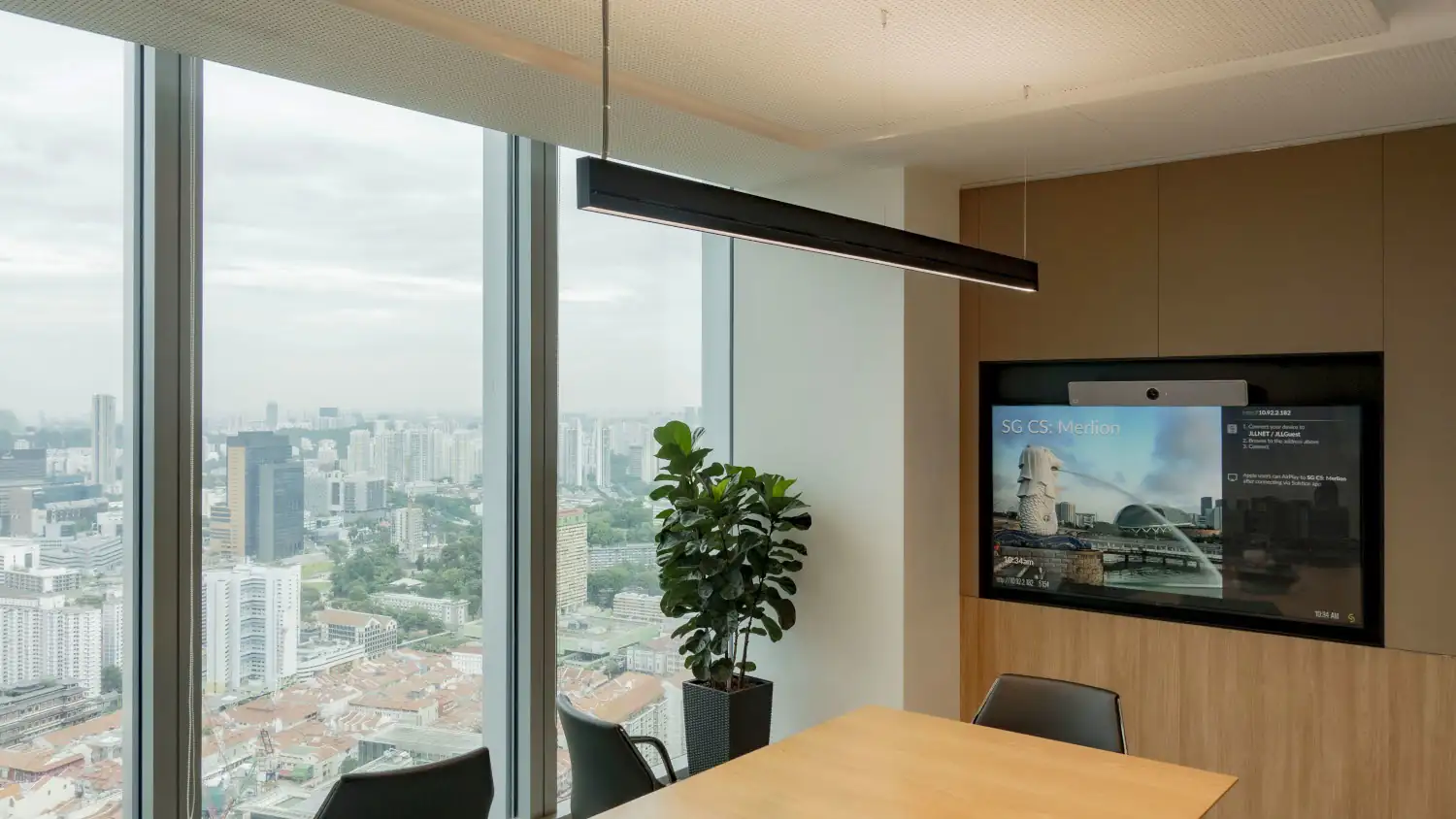
Intelligibility comes from controlling where the sound goes, not just how loud it is. Our Pure Array Technology gives narrow, predictable vertical coverage, which means speech energy reaches the listener without exciting reflections off glass, screens, and hard surfaces, the usual enemies of a modern meeting room. Combined with appropriate DSP and room tuning through K-Framework, we deliver consistent STI scores across the seating area rather than hotspots and dead zones.
The user experience gain is that people stop noticing the audio and start focusing on the content. Remote participants sound present, not processed. That’s the standard hybrid working should be held to. But you have to hear it, experience it to truly understand what we are able to achieve here.
What role does KSCAPE play in creating immersive and flexible corporate spaces? How does KGEAR complement your offerings for more cost-sensitive corporate projects?
KSCAPE is our division dedicated to merging architectural lighting with pro audio. The flagship, RAIL, is the first architectural light with integrated professional audio, a single installed element delivering both functions. For corporate clients building flexible, experience-led environments, this is transformative: one piece of infrastructure, two disciplines resolved, dramatically cleaner ceilings.
KGEAR complements this at the other end of the spectrum. Same engineering DNA as K-array, engineered for broader commercial deployment where budget sensitivity matters, distributed meeting rooms, huddle spaces, back-of-house areas, education and government. It lets us deliver a consistent performance standard across an entire building rather than forcing clients to mix brands. For a corporate rolling out a global estate, that consistency is commercially meaningful.
What are the most common pain points in corporate AV that K-array aims to solve?
Three recurring ones. First, visual clutter, speakers, grilles and brackets that undermine design intent. Second, poor intelligibility in acoustically hostile rooms, which is most of them. Third, fragmented specifications where audio is an afterthought, procured late and never integrated properly with the design or the wider AV stack.
Our response is to engage earlier. We work directly with architects and consultants at the design stage, provide full acoustic modelling and system design support, and treat each project as bespoke rather than catalogue. That upstream involvement is how you prevent the pain points rather than patch them on site.
How does K-array ensure seamless integration with other AV and IT systems commonly used in corporate spaces?
Our ecosystem is built around major standards like Dante, AES67, and third-party control integration with the major platforms integrators already deploy. K-Framework handles system configuration and tuning; K-Cloud and K-Monitor provide remote management and diagnostics at estate scale. For global corporations managing hundreds of rooms, that remote visibility is no longer optional.
We also invest heavily in integrator enablement through K-Academy, so the integrators and consultants specifying our systems have direct access to training, design tools and technical support. In APAC we have a strong partner infrastructure already in place, which means clients get local delivery quality alongside Italian engineering.
How do you help corporate clients and integrators measure ROI when investing in premium audio solutions?
ROI in corporate audio is rarely a pure cost calculation, it’s about lifecycle, user outcomes, and brand signal. We frame it across three measures. Total cost of ownership: our systems are engineered for 10-15 year service life, backed by a five-year warranty, so the amortised cost is often lower than a cheaper system replaced twice. Productivity and engagement: intelligible, frustration-free meeting environments have a measurable impact on hybrid meeting effectiveness and user satisfaction. Also brand equity: for client-facing spaces, headquarters and experience centres, the quality of the environment directly affects how the business is perceived.
We work with clients to build that business case during design, rather than leaving integrators to defend the price tag at procurement.
Looking ahead, how do you see audio, AI and integrated technologies shaping the future of corporate environments?
AI will play a role in room tuning, predictive maintenance, adaptive acoustics and we’re engaging with it pragmatically rather than chasing hype but the bigger shift is integration. Audio, lighting, acoustics and control are converging into single architectural systems. KSCAPE is our early bet on that convergence. The corporate environments of the next decade will be defined less by discrete AV equipment and more by unified design disciplines.
What won’t change is the fundamentals. Great corporate audio will still come down to design partnership, tailored engineering for each space, and the discipline to make the technology disappear. That’s where K-array commits its effort, being a design partner to the architects, consultants, and end clients who care about getting it right, not a vendor chasing the next spec.